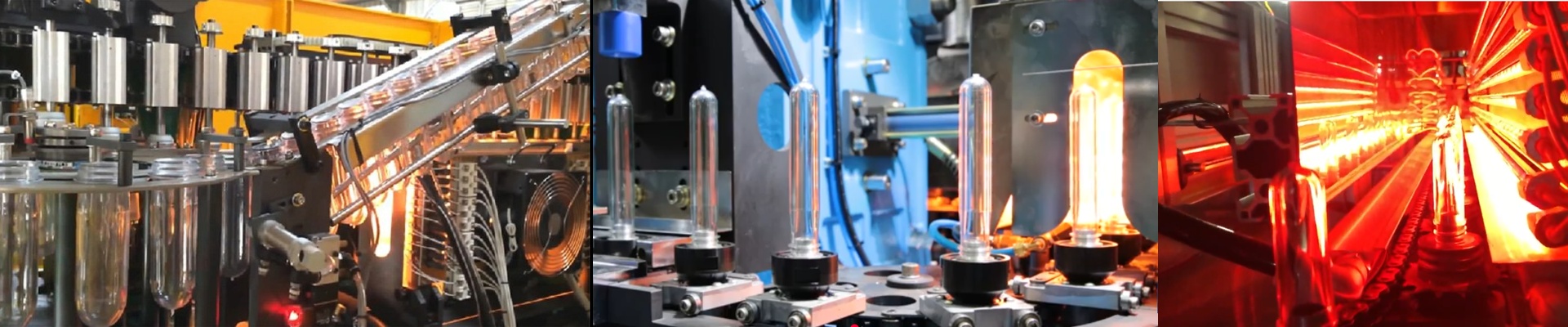
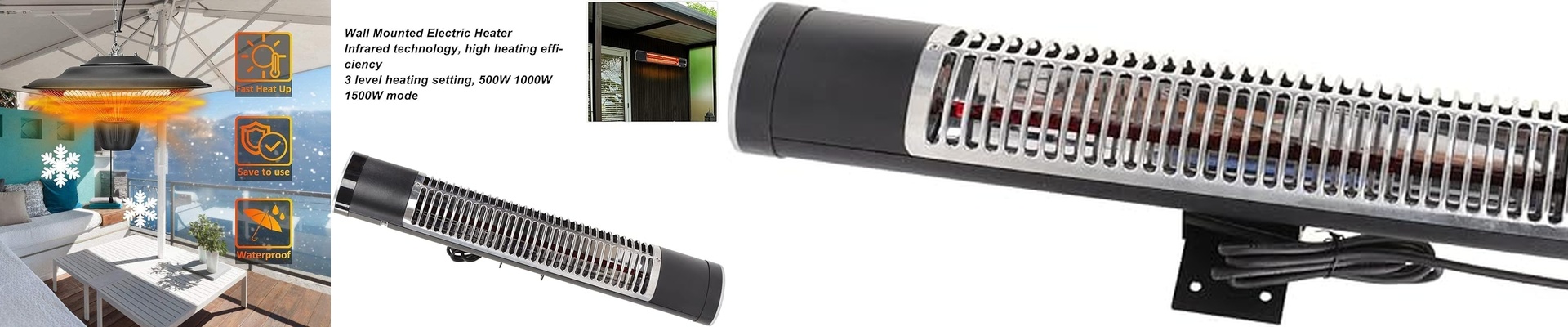
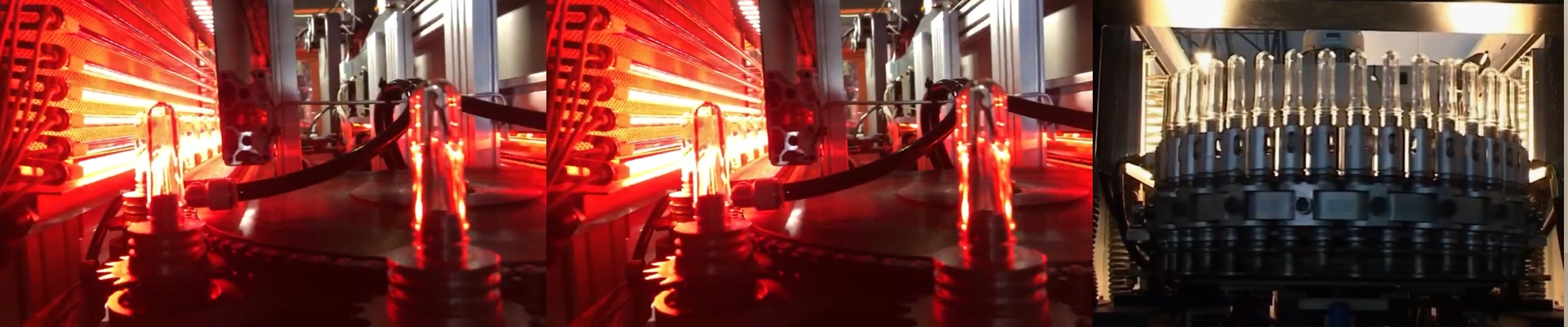
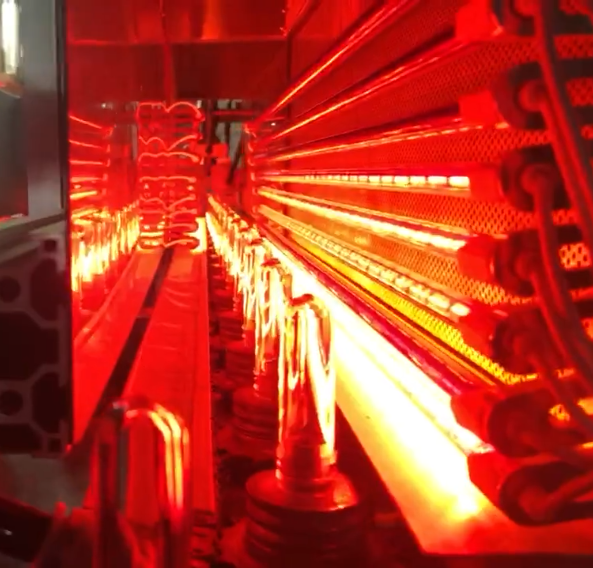
On the blow molding line, uneven preform heating doesn’t just throttle the machine—it manufactures scrap. When the heating tunnel can’t hold the set profile, you get thin spots, crystallization, and stretch that’s all over the place. We built our high-temperature infrared emitters to give you repeatable control right where it matters: inside the oven zone, as the PET preform makes the jump from solid to ready-to-blow. What matters, technically We spec short-wave halogen infrared lamps built for the fast, high-temp reality of PET preform heating. Typical units are 230V or 115V, with power densities matched to the blow molder’s oven length and zone layout. The quartz envelope takes the thermal shock of rapid on/off cycling, and the R7s base drops straight into standard reflector assemblies. Peak wavelengths are tuned to PET absorption, so the energy goes into the preform wall—not into warming the air around it. We pair filament geometry with reflector optics to deliver a focused heating pattern and a stable temperature band across the tunnel. Why this works in stretch blow molding The oven is the bottleneck when heat isn’t uniform. These emitters put the temperature curve back where it should be, so you get the right biaxial stretch without overheating the neck finish. The payoff is fewer rejects, cycle times that stay steady, and less downtime chasing temperature drift. Energy use drops because the input is absorbed where it counts, and lamp life stretches when you run at the correct voltage and temperature profile. Things to keep straight Installation is straightforward, but the oven is a harsh environment. Confirm your machine’s exact lamp length, wattage, and connector type before ordering—dimensions can vary even between similar models. Handle quartz with clean gloves to avoid hot spots, and keep reflectors clean and aligned. Schedule replacements during planned maintenance, because mismatched lamps can tilt the heating balance across zones.